

According to Wikipedia, here is a description of a book about North Kingstown Cemeteries……
“The definitive book on local burial grounds is "Graveyards of North Kingstown, Rhode Island" by Althea H. McAleer, Beatrix Hoffius and Deby Jecoy Nunes. Published in 1992, this comprehensive, privately published volume catalogs the historical cemeteries throughout the town. The book serves as a vital genealogical and historical resource. It provides detailed registers of burials, inscriptions, and exact locations—making it the go-to reference for mapping North Kingstown’s many hidden and forgotten graveyards.”
This photo is a small portion of a map created by Althea H. McAleer identifying the location of all North Kingstown's cemeteries. The map was provided by Jan McAleer, Althea’s daughter.
According to Find a Grave, a cemetery web page, there are 228 cemeteries in the Town of North Kingstown.
The eight historic villages tell their stories through people that came to the area. They farmed the land, created industries, and started the framework of the economic, social, and governmental structure of today. While many cemeteries to a casual observer might look quite similar, after a closer look the differences are distinct and reveal stories and secrets that have the ability to fascinate.
Choose a cemetery, then select Go to jump to that section.
Elm Grove Cemetery
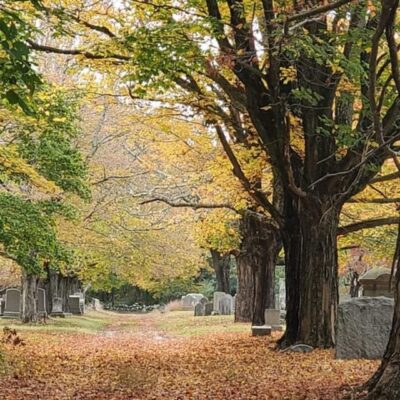
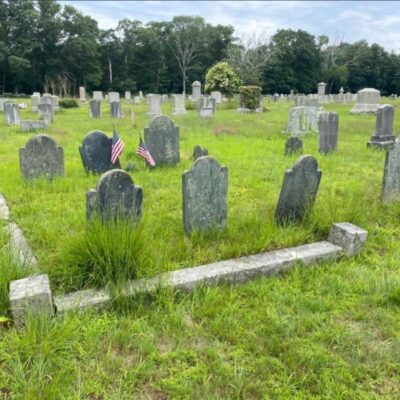
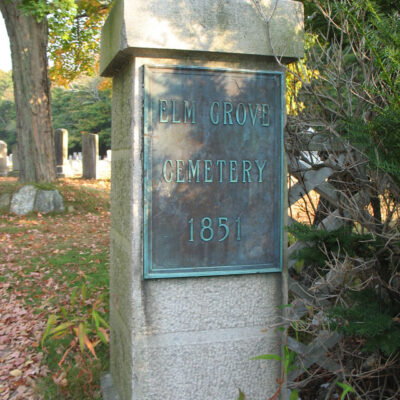
Founded in 1851 at 960 Tower Hill Road, Elm Grove Cemetery is North Kingstown’s first public cemetery. Spanning 44 acres, it contains over 10,000 burial plots.
Before Elm Grove's establishment, most burials in North Kingstown took place on small, privately owned farm sites. Elm Grove was intentionally created to serve as the town's first expansive, public "garden cemetery”.
This effort was largely spearheaded by Dr. George Church who advocated for a dedicated municipal burial ground. He was supported by public-spirited citizens, notably Robert Rodman, who helped form an organization, secure a charter, and purchase the land.
Historic graves, that were sometimes unkept, were relocated to Elm Grove. Over the decades, entire family cemeteries (such as those from the Albert Farm) were placed in Elm Grove.
Quonset Point also impacted the cemetery development. During the 20th century, the expansion of the government property at Quonset Point resulted in the relocation of additional historical graves from the Camp Avenue area into Elm Grove Cemetery.
Quidnessett Memorial Cemetery
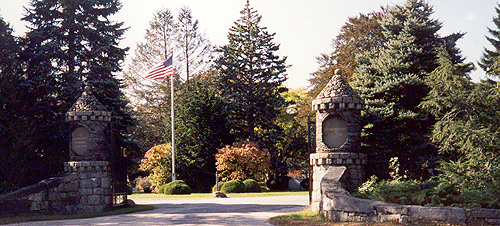
Founded in 1902, Quidnessett Memorial Cemetery in North Kingstown, Rhode Island was established by Helen F. Gay Sweet to provide a permanent, accessible resting place for her first husband. Originally a 125-acre expanse of woodland, it is now celebrated as one of the most serene memorial parks in New England. The cemetery has a rich and unique history.
In 1941, the U.S. Government removed 14 old burial plots from South Quidnessett farms to build the former Quonset Naval Air Station. Quidnessett Memorial Cemetery was chosen to rebury these individuals and carefully preserve over 100 ancient headstones. Two large U.S. Government stones mark the resting place of fifty-four unidentified pioneers from the area.
The grounds are the final resting place for over 1,350 U.S. veterans, whose graves are meticulously decorated with flags by community groups.
Here you will also find the graves of many notable local figures, including the inventor of the Bostich stapler and the mill owner for whom Davisville is named.
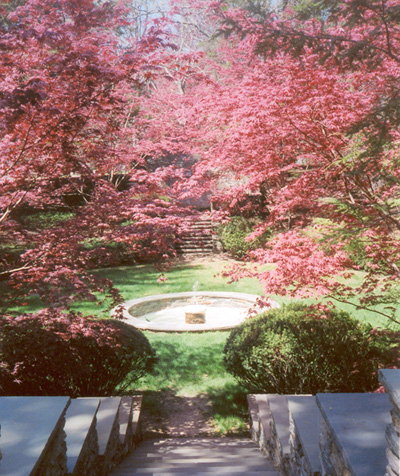
The Old Narragansett Cemetery
Established in the early 1700s, it served as the original burial ground for the adjacent church, called Old St. Paul's or the Old Narragansett Church, built in 1707.
The Old Narragansett Cemetery is a historic cemetery on Shermantown Road in North Kingstown, Rhode Island. Variant names for the cemetery include Narragansett Cemetery, Platform Cemetery, and The Platform Cemetery. The cemetery occupies a 1.2 acre plot, it has 110 marked graves, and was used from its establishment c.1705 to the 1880s. The most prominent memorials are to James MacSparran and Samuel Fayerweather, two long-serving ministers at the Old Narragansett Church, which stood nearby. The earliest marked graves date from the 1710s, utilizing simple fieldstone markers.
As the surrounding agricultural settlement dispersed in the 1800s and Wickford became a booming coastal trade center, the church was disassembled and relocated to its present site on Church Lane in Wickford. Unlike the church, the cemetery was left behind and remained in its original rural location. It continued to be utilized until the 1880s.
In 1868 The Episcopal Diocese of Rhode Island had a stone wall built around the perimeter of the burial ground to preserve the site.
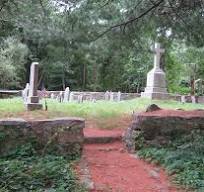
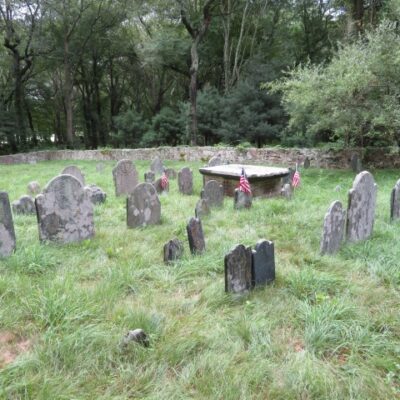
The Silas Casey Lot
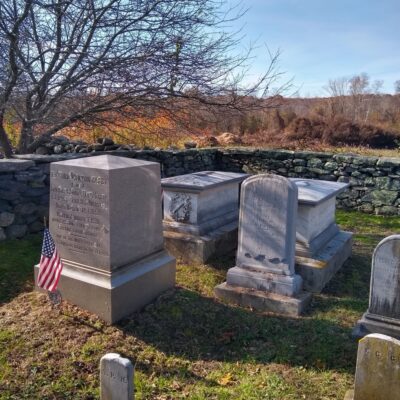
The Silas Casey Lot is the historic family cemetery located on the grounds of the 18th-century Casey Farm in North Kingstown, Rhode Island. The plot contains the graves of several generations of the Casey family, spanning from the 1700s to 1955.
The cemetery site was chosen in the late 17th or early 18th century. After 1855, Civil War Union General Thomas Lincoln Casey (son of Silas) relocated some of the oldest marked headstones from nearby East Greenwich to the cemetery on the farm. He gathered ashes and stones of his ancestors to consolidate several generations of his family's graves into one protected heir-loom plot and surrounded the sacred area with a stone wall.
Major General Silas Casey (1807–1882) was a veteran of the Seminole, Mexican-American, and American Civil Wars. He was laid to rest at this family lot.
Later on the cemetery also became the resting place of Thomas Lincoln Casey, who supervised the completion of the Washington Monument in 1884, as an Army Corps of Engineers officer.
Since 1955, Casey Farm—including the Silas Casey Lot—has been owned and maintained by the preservation organization Historic New England.
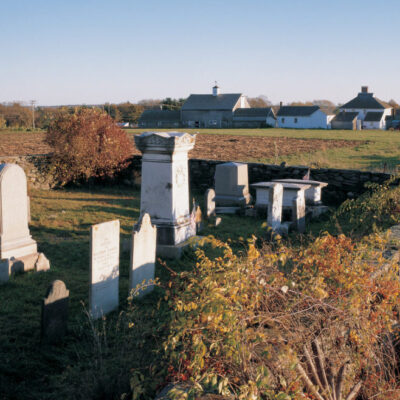
The William Hall Lot
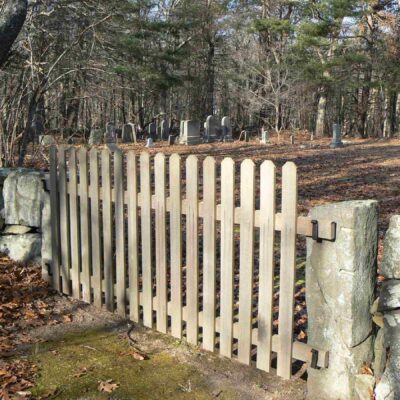
The William Hall lot near the Historic Village of Wickford, Rhode Island and the Hall family have deep roots in the region's judicial and social history. This lot sits on the west side of a section of the Old Post Rd, south of the State Police barracks. It is enclosed by a fieldstone wall with a white picket gate.
In the colonial era, the Hall family of Wickford, North Kingstown, RI was heavily intertwined with the region's early settlement. William Hall, a prominent Justice of the Peace, was especially known for presiding over unconventional early colonial weddings in the three-town border area of Wickford.
A fascinating and highly unusual 1717 historical record details William Hall performing a marriage where the bride wore only her "shift" (an undergarment/chemise). This was an old English legal custom practiced in the colonies; it was believed that if a woman married in this state, her new husband would not be held liable for any of her pre-existing debts.
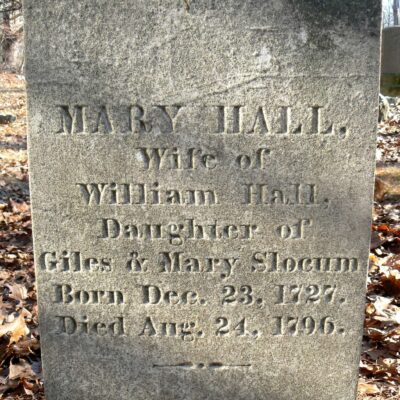
It is the final resting place of William Hall (c. 1721–1795) and several of his descendants, including his wife Mary (Slocum) Hall.
The Willett-Carpenter Lot
The Willett-Carpenter Lot in Saunderstown, North Kingstown, RI is a historic walled burial ground located just north of Carrol Road on the west side of Boston Neck Road.
The main lot is the walled, well-maintained ancestral burial yard for the Carpenter and Willett families. The land was originally owned by the region's first major settlers, including Andrew Willett b.1656-d.1712 (son of the first mayor of NYC) and Thomas Willett. Both are buried in this lot. It features roughly 22 burials and was originally recorded by local historian James H. Carpenter in 1880.
A few rods southwest of the main lot sits a second, unprotected knoll where 10 slaves of the Willett and Carpenter families were historically buried. Unlike the main family lot, this adjoining site has been largely lost to time and agricultural use.
The immediate area around the lot was originally known as "Willettville" and was a major 17th-century settlement. It was later renamed Saunderstown after the marine railway and shipyard were established in 1856 by the Saunders and Carpenter families.
-
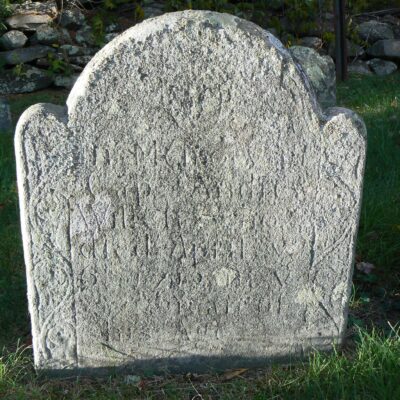
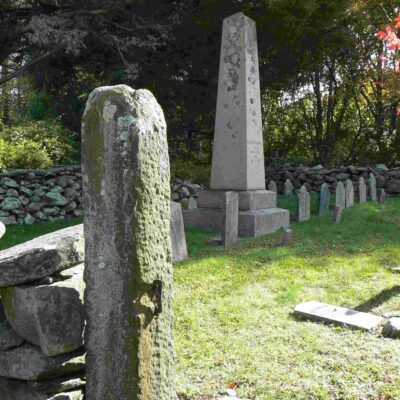
- The headstone of the area’s first colonial settler Andrew Willett.
Get Involved
Support the preservation of North Kingstown’s history.