

The 19th century saw water-rich North Kingstown, with its many rivers and streams, plunge headlong into the textile revolution that had begun earlier in the northern part of the state. Numerous mill villages were established at every feasible location along the Hunt, Shewatuck/Annaquatucket, and Pettasquamscutt River systems. Larger villages like Lafayette, Hamilton, Belleville, and Davisville, as well as smaller forgotten hamlets such as Oak Hill, Annaquatucket, Narragansett Mills, Shady Lea, Silver Springs, and Sand Hill Village, owe their existence to the dominance of the textile trade throughout this timeframe.
The textile industry largely flourished throughout this century and into the first quarter of the 20th, but soon after, as happened all across southern New England, this way of life began to ebb. By the close of the 1930’s the age of the mill village was largely a thing of the past.
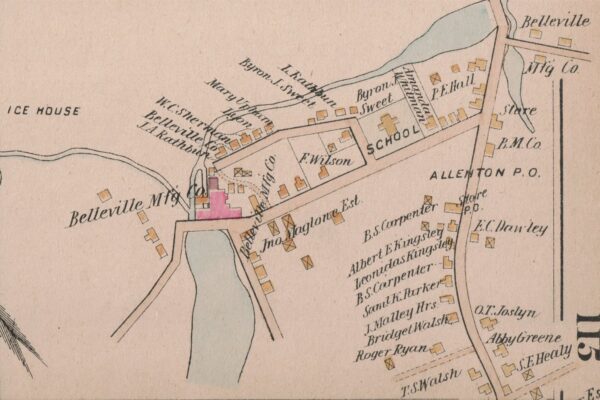
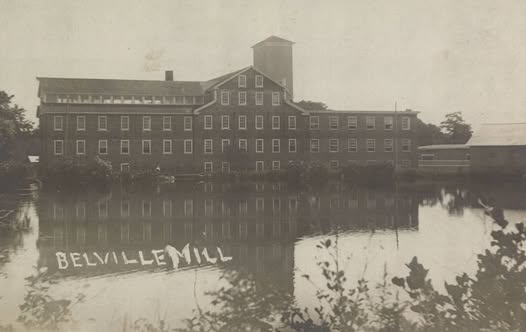
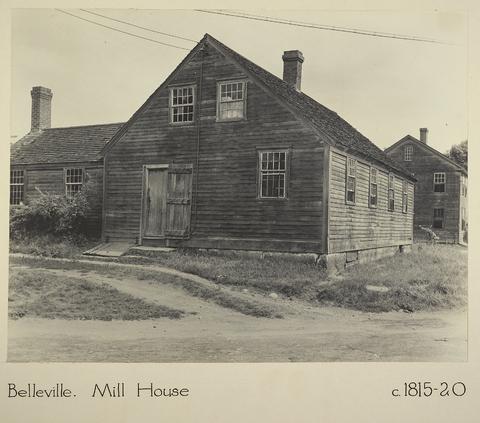
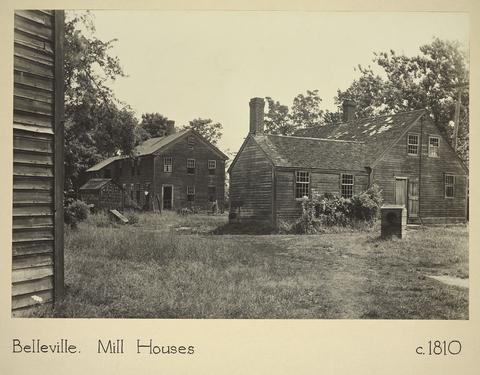
Belleville Mill
The Belleville Mill was a prominent 19th century textile factory and the anchor of a historic mill hamlet located on Oak Hill Road in North Kingstown, Rhode Island. Established in the early 1800s, the mill and its surrounding village shaped the town's industrial past. It was situated along the Shewatuck River, which formed the nearby Belleville Pond and Secret Lake. It started as a sawmill and gristmill before shifting to cotton and wool manufacturing. The building was ultimately destroyed by a major fire in 1969.
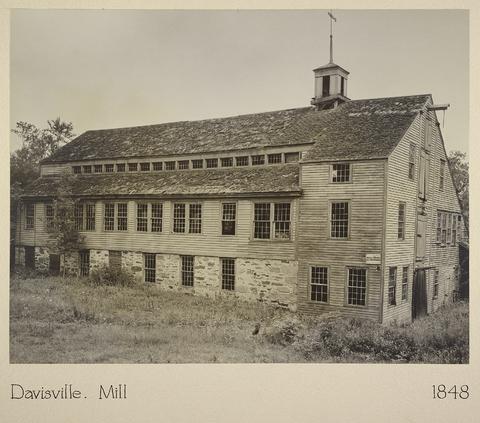
Davisville Mill
The historic Davisville Mill was the cornerstone of the Davisville village in North Kingstown, Rhode Island, and a major regional pioneer in water-powered textile manufacturing. Spanning back to the 1700s, the site played a vital role in early industrial history before transitioning into a quiet residential and archaeological area.
The area was settled around 1694 by Joshua Davis. By the early 18th century, a gristmill and sawmill were established on the banks of the Hunt River.
In 1811, the Davis family began operating one of the earliest water-powered woolen looms in the entire region.
The original mill burned down in 1847 and was immediately replaced by a larger two-story mill. The mill and surrounding village produced textiles until it closed in 1924.
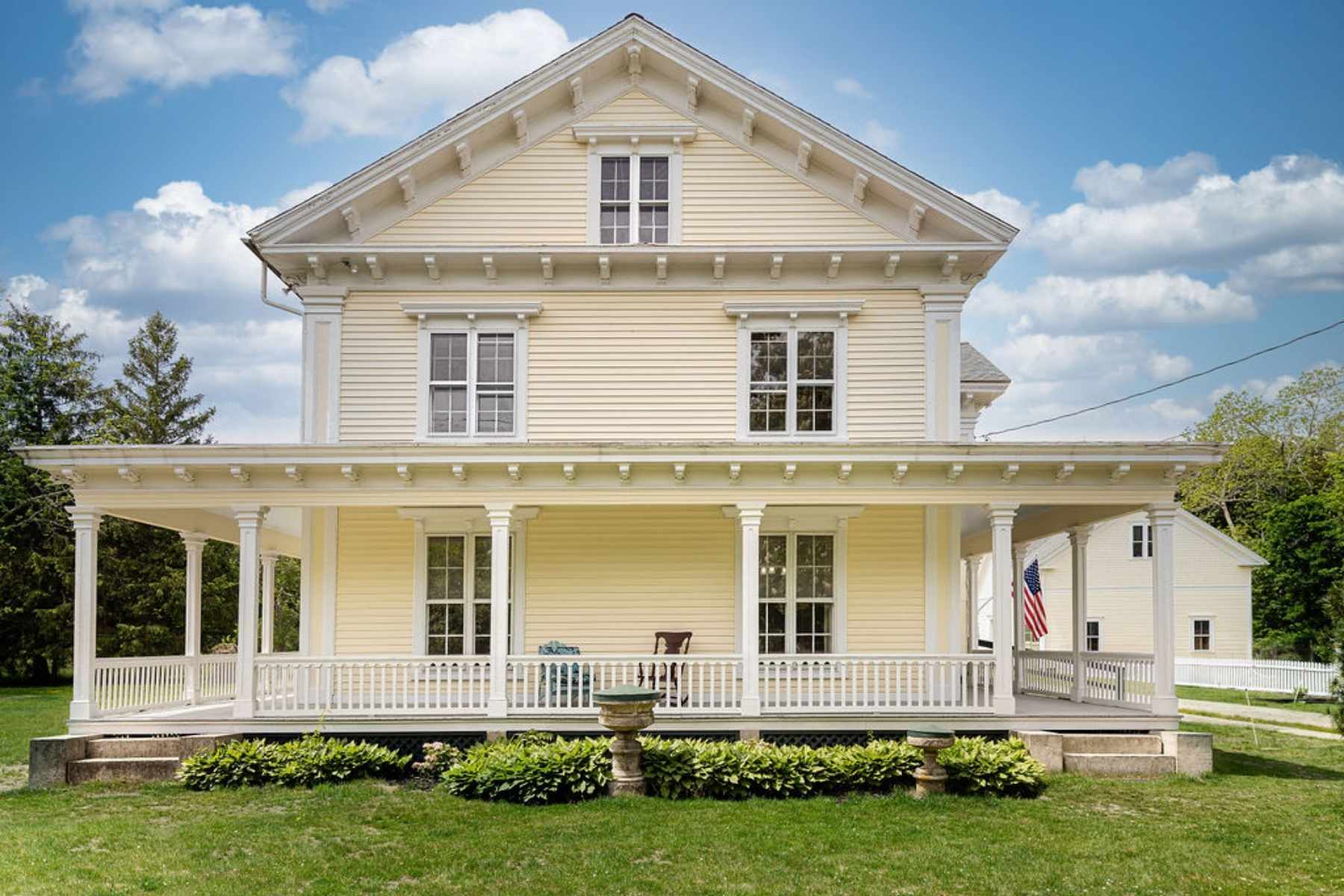
Once home to members of the Davis family, whose early mill operations helped shape this corner of North Kingstown. Rich with authentic period flooring, original millworker, antique details, and a striking curved staircase, the residence reflects the craftsmanship and character of a bygone era.
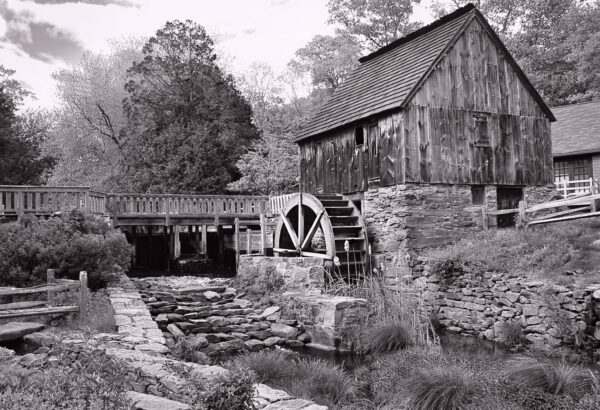
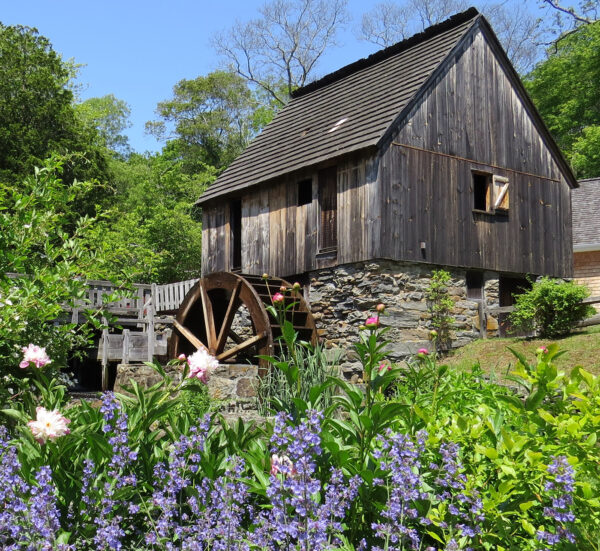
Gilbert Stuart Snuff Mill
When you first think about the Gilbert Stuart Birthplace in the village of Saunderstown RI, you might think about the famous painter of George Washington and the dollar bill. Actually, a significant business was established on this site as the very first mill of its kind in colonial America.
The house on the property was built in 1751, and Gilbert Stuart lived there for six years. His father operated the family business in the basement of the house, where a water-powered snuff mill was located. He ground dried tobacco leaves into snuff, a fine powder used widely in the colonial era, and his was actually the first such mill in America.
Hamilton Mill
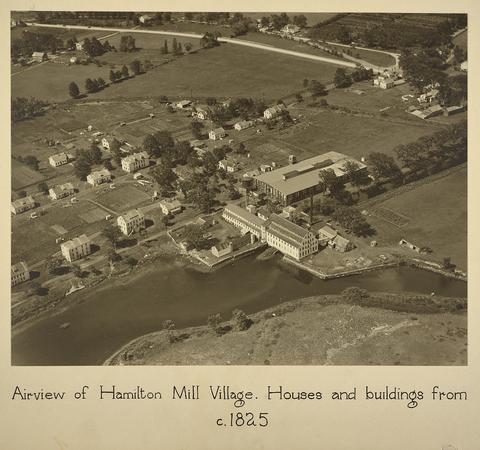
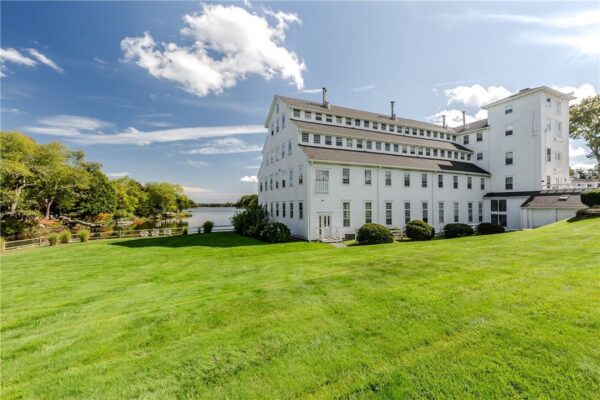
At the mouth of Bissell Cove stands a mill that was established by Richard Wharton in 1686. Built as a grist mill, it became an important manufacturing hub in this area, even as its usage changed several times. This mill and the surrounding area became the Historic Village of Hamilton in the town of North Kingstown, RI.
Roger Bissell bought the property and its nearby waterfall in 1709, hence he named the cove. This waterfall and waterway were used to power one of the first water-powered mills in southern RI. The Bissell family is credited with creating the village.
As with most mills, it became the source of wages for village residents. With that came housing, shops, a meeting house and school.
Long after the mill was established it was sold to Joseph and Albert Sanford in 1847. They shifted to the textile industry. The mill was then sold to Syria Vaughan in 1849. The village was then named Hamilton, after his wife’s family.
In 1883 the mill was purchased by the Green family, whose focus was producing narrow fabrics. They were the last owners until the mill closed in 1978.
The Hamilton Mill was converted into condominiums, the old mill houses were refurbished, and Bissell Cove remains beautiful to this day.
Hamilton Mill Village was listed on The National Register of Historic Places in 1983.
Kettle Hole Mill
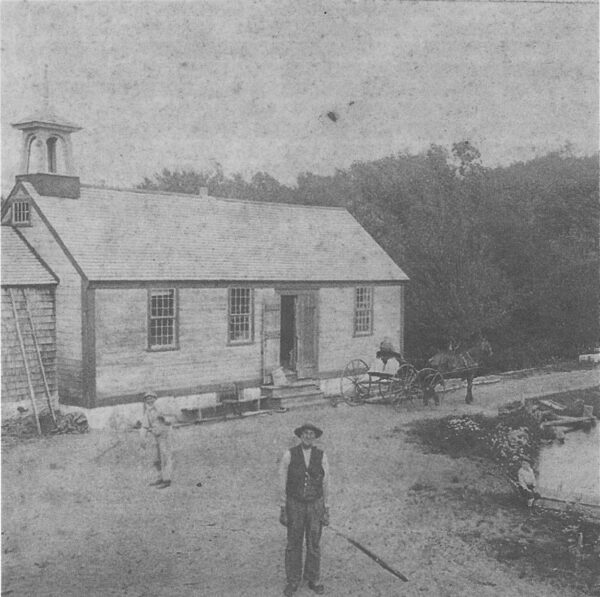
Inexorably tied to the North Kingstown Kettle Hole is the name of Charles Henry Rose and his grist mill. Rose was born in Swamptown on Nov. 7, 1826, to Charles Rose and Lydia Congdon. After a distinguished career as a nurse during the Civil War, he purchased the Kettle Hole property and opened a grist mill in the existing building which had formerly been a small cotton mill. Rose’s specialty was grinding the locally grown corn into johnnycake meal and, although well-known as a miller, his local fame grew out of his eccentric personality and quick wit. He was known as a poet and a philosopher and he always had time to entertain his customers with Swamptown legend and lore.
Text by G. Timothy Cranston
Sandy Hill Mill
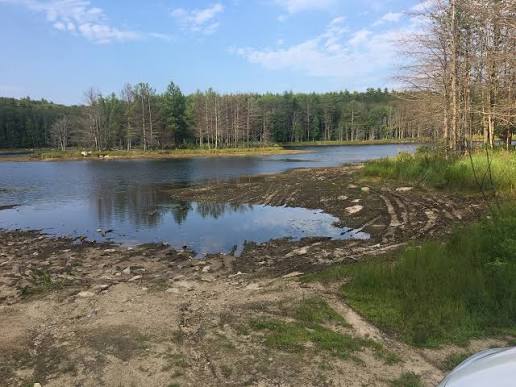
The Sandy Hill Mill (more historically documented as the Sand Hill Mill or Sand Hill Village Mill) was an active mill in a historical hamlet called Sand Hill Village. This small 19th-century textile mill was located along Sandhill Brook near Post Road and Chadsey Road in North Kingstown, Rhode Island.
The originators of the historic Sand Hill Mill in North Kingstown, Rhode Island were Ezbon Sanford Jr. and his brother Joseph Congdon Sanford. (Remember their names when you read about other mills)
Operating as part of the region’s historic industrial expansion it manufactured woolen textiles (primarily fabrics for garments and blankets) during the peak of its 19th-century operations.
The original mill was destroyed by fires in the late 19th century. Over the decades, the old mill village vanished into a "village fragment," and the original mill pond (Sand Hill Pond) dried up or was filled in as the northern Post Road corridor developed. Some of the area has transitioned to a marsh area.
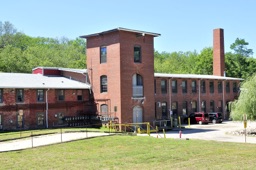
Shady Lea Mill / Springdale Factory
The east part of the Shady Lea Mill building was built in the late 1820s by Esbon Sanford to manufacture a fabric that was a cross between burlap and the dungaree fabric of today called Kentucky Jean. Sanford was one of the early pioneers of the textile industry in North Kingstown and was also involved in the beginnings of the Annaquatucket and Narragansett Mills.
In 1832 Mr. Sanford sold the mill to Edward Tillinghast. The mill changed hands many times until its purchase by Rodman Manufacturing in 1871. From its inception, right up until its purchase by Rodman Manufacturing, the mill was known as the Springdale Factory.
It was the Rodmans that began calling the mill Shady Lea Mill. The mill stayed in the Rodman family until 1952, when Rodman Manufacturing closed up shop due to competition from textile mills in the south.
Silver Spring Mill
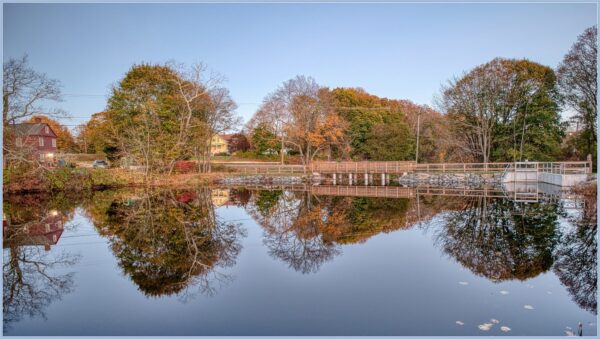
You may have driven past this spot hundreds of times. Little did you know of its history as a beautiful waterfall and the mill story behind it.
At the intersection of Route 1 and Route 4, across the street from a new favorite wine bar, sits the beautiful Silver Spring Pond and waterfall.
Per town historian, Tim Cranston, back in 1762, entrepreneur Joseph Taylor decided to dam the Mettatuxet River in order to construct one of the area’s first fulling and carding mills. His dam and its associated waterfall, which has been rebuilt and reinforced many times, is still a joy for all to behold nearly 260 years later. The dam is a living artifact, testifying daily to one of the colonist’s earliest attempts to harness the power of the area’s many streams and rivers.
Fulling and carding was a process that created wool fabric. Residents in the area brought Mr. Taylor wool they had sheared from their sheep and he would clean, comb, and card it to prepare it for eventual spinning into yarn on the many family spinning wheels which existed at virtually every home in the region. After the yarn was spun and it was woven into cloth, it would be brought back to the mill for fulling. Fulling is the process of shrinking and thickening woolen cloth by a combination of moistening, heating, and pressing. This gives the cloth more body, insures that it retains its shape, and makes it thicker.
Content attributed to G. Timothy Cranston
The Rodman Mill at Lafayette
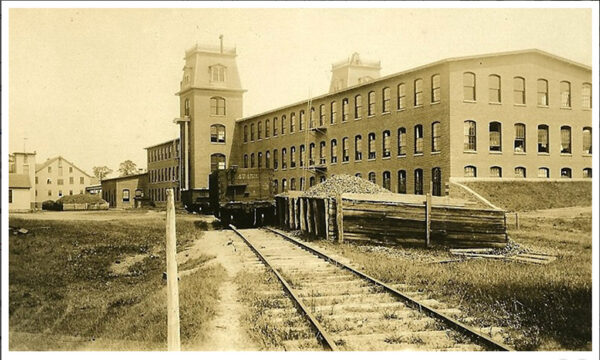
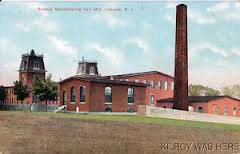
Lafayette, found on either side of Ten Rod Road, was easily the largest and most successful mill village in North Kingstown. It was the center of the Rodman family textile empire that, at its peak, included the mills at Shady Lea, Silver Spring, Narragansett Mills, and a mill outside of nearby Wakefield.
Robert Rodman purchased the site in 1847 as a cotton mill, but quickly retooled the machinery from cotton to woolen manufacturing. He expanded and built the large brick mill and associated structures in 1877. At its peak Rodman Manufacturing in Lafayette alone employed more than 500 people. The village included every amenity required at the time; two churches, two schoolhouses, a community meeting hall, a post office, a company store, various other stores and shops, large and small boarding houses, a park, and even a winter crypt were made available for the greater Rodman Manufacturing “family” over the years. The Rodmans themselves constructed four fine mill-owner mansions within walking distance of the mill building.
Rodman Manufacturing closed in the late 1940’s after more than 100 years, largely due to the competition brought to bear by cheaper costs at southern manufacturing facilities and the onset of synthetic fabrics.
The Sanford Brothers and their Mills
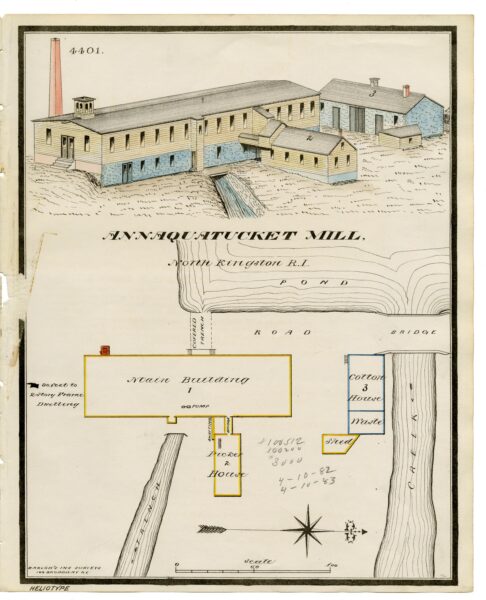 Quotes taken from “Forgotten Textile Mills of North Kingstown, Rhode Island: The Sanford Brothers’ Mills.”
by Jeroen van den Hurk
“At the beginning of the nineteenth century, Joseph Congdon Sanford (1788-1856) and his younger brother Ezbon (alternatively spelled Esbon) Sanford, Jr. (1798-1864) of North Kingstown, Washington County, Rhode Island, were drawn into the emerging textile Industry…..”
“…..remnants of two mills on the Annaquatucket River in North Kingstown….. No historic markers tell us who built and owned the two mills. Research reveals that they were once owned by Joseph C. and Ezbon Sanford.”
Joseph C.’s mill was about a mile away from Ezbon’s mill. Beginning around 1818, The Narragansett Mill (also known as Sanford's Mill) was located along the Annaquatucket River near Tower Hill Road (US Route 1) in North Kingstown. The location is at the corner of Tower Hill road and Daniel Drive. The only sign of the mill that remains is the original culvert made to channel the water to power mill operations.
Ezbon’s mill, built around 1832, was located on the Annaquatucket River at Featherbed Lane. Remnants of Ezbon’s Annaquatucket Mill are the foundation of the mill itself and the ruins of the cotton and waste house.
“Although next to nothing survives of the Sanford brothers’ mills, both men were an important part of nineteenth-century life in North Kingstown and Rhode Island and contributed to the nation’s Industrial Revolution. Their lives and labors, and those of the workers they employed, deserve lasting acknowledgement.”
Both Ezbon and Joseph are buried in Elm Grove Cemetery in North Kingstown, Rhode Island.
-
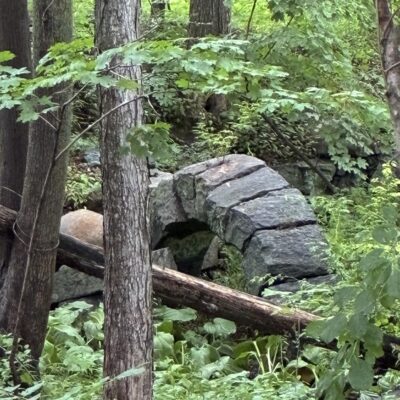
- Culvert to direct the Annaquatucket River for Joseph Sanford’s Mill
-
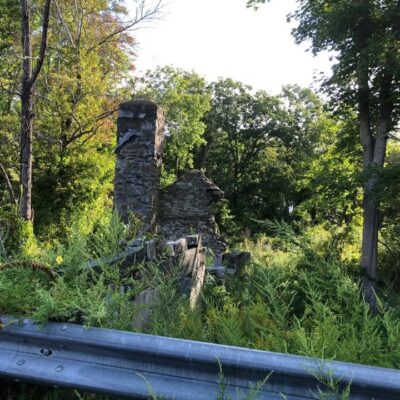
- Remains of Ezbon Sanford’s Annaquatucket Mill
-
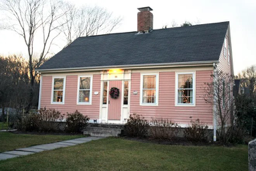
- Ezbon Sanford house on Featherbed Lane, North Kingstown, RI
Get Involved
Support the preservation of North Kingstown’s history.